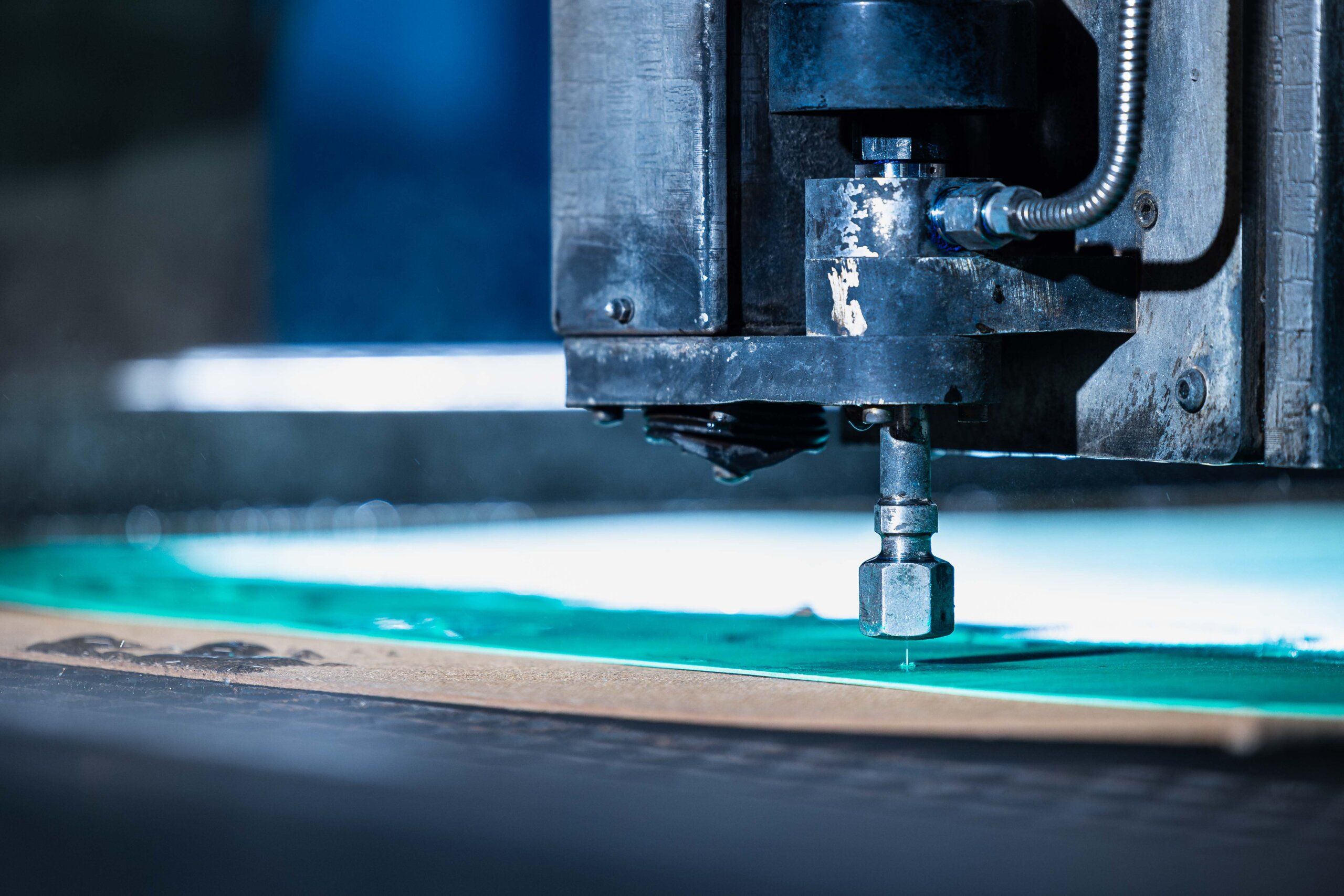
WATERJET CUTTING
Waterjet cutting in rubber and plastic – precision machining without heat impact
We offer industrial waterjet cutting in rubber and plastic for applications with high demands on accuracy, material integrity, and repeatability. Waterjet cutting is a cold cutting process where a high-pressure jet of water – often with abrasive additives – cuts through the material with very high precision.
Unlike thermal cutting methods, no heat-affected zone (HAZ) is created, which means the material's mechanical properties are maintained. This is particularly important when processing engineering plastics and elastomers, where heat can cause deformation or altered material properties.
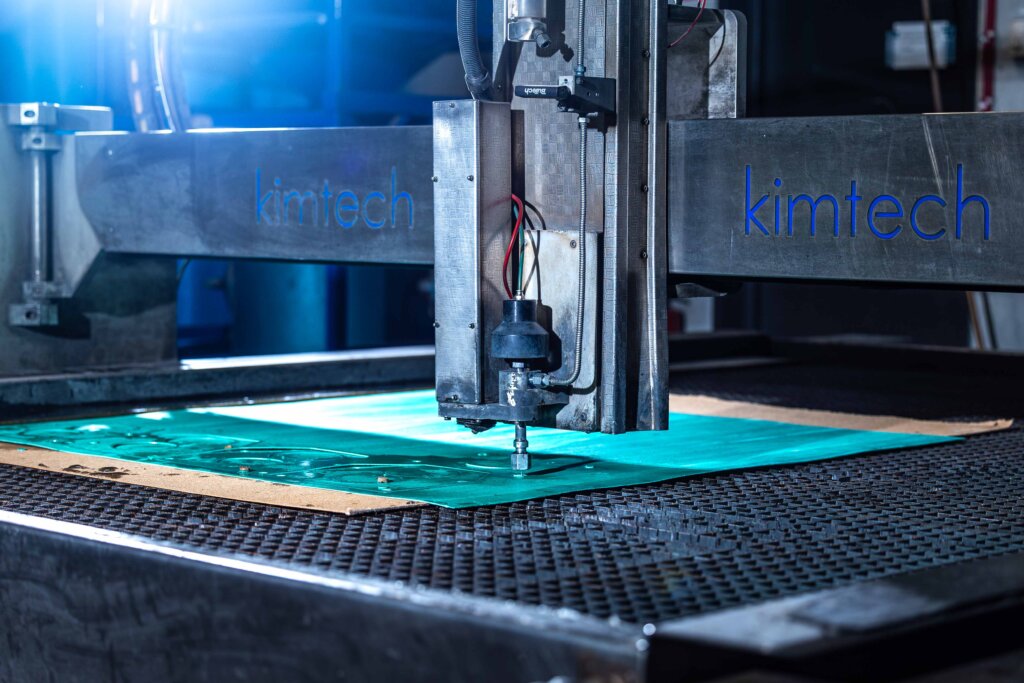
We waterjet cut, among other things:
– Gaskets and seals
- Rubber components for industrial use
– Plastic components with tight tolerances
– Custom industrial parts in small and large batches
Technical advantage of in-house waterjet cutting in Örebro
By having waterjet cutting in our own production, we can control tolerances and quality at every step, ensure repeatability in series production, minimize lead times between design and finished part, and quickly produce prototypes and adjust designs.
For customers in Swedish and European industry, this means a flexible partner with high technical expertise in waterjet cutting of rubber and plastic.
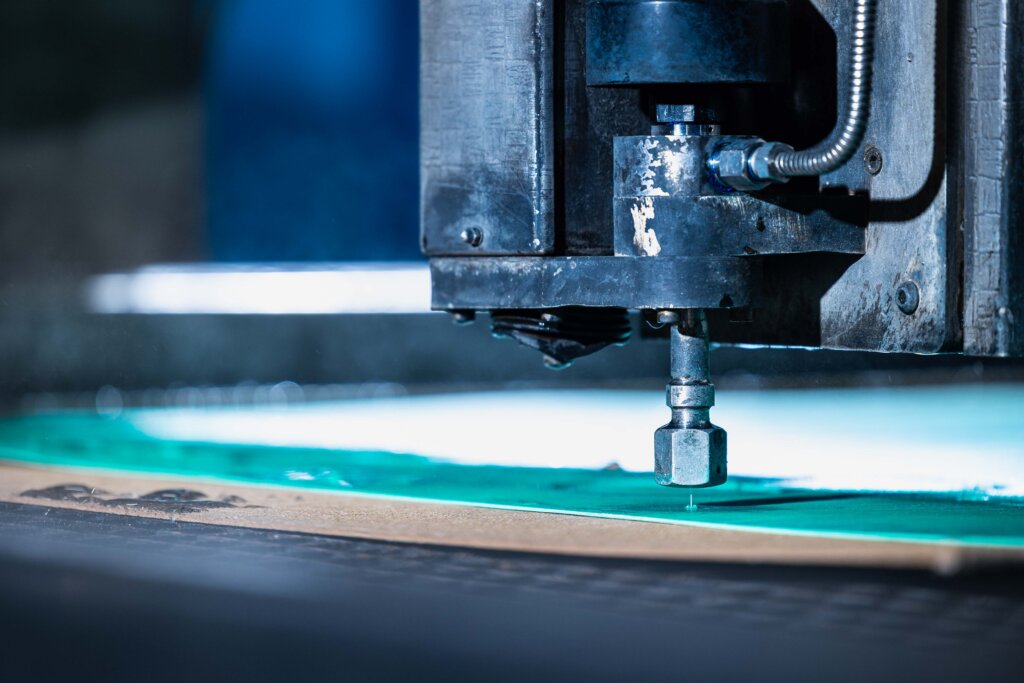
What is waterjet cutting?
Waterjet cutting is a cutting method where a high-pressure jet of water and abrasive additives (e.g., sand) are used to cut out details from various materials with high precision.
Thanks to waterjet cutting using a cold water jet, no heat is generated against the material, and its properties can be preserved without risk of deformation or burned cut edges.
Waterjet cutting can be used for:
Water-jet cutting can be used when details need to be cut with accuracy and high precision, without affecting the material's properties. The method is particularly suitable for both simple and complex shapes, as well as for prototypes, single-piece parts, and mass production.
At IP Industriprodukter, we primarily use waterjet cutting for customized parts made of rubber and plastic, where clean cuts and precise dimensions are crucial for the final result.
Waterjet cutting can be used on a wide variety of materials, including: * **Metals:** Steel (stainless, carbon, alloy), aluminum, brass, copper, titanium, exotic alloys, etc. * **Plastics:** Acrylic, polyethylene, PVC, ABS, polycarbonate, etc. * **Stone and Ceramics:** Granite, marble, tile, glass, porcelain, advanced ceramics. * **Composites:** Carbon fiber, fiberglass, Nomex honeycomb. * **Rubber and Foam:** Natural rubber, synthetic rubber, various types of foam. * **Wood and Laminates:** Plywood, MDF, hard and soft woods, laminates. * **Foodstuffs:** Bread, cheese, fruits, vegetables, frozen food. * **Other Materials:** Paper, cardboard, textiles, leather, insulation. Essentially, if a material can be cut without burning, melting, or generating harmful fumes, and it doesn't shatter from the impact, it's a candidate for waterjet cutting. The addition of an abrasive (like garnet) allows for the cutting of even very hard materials.
Waterjet cutting is a versatile cutting method that can be used for many different materials. Examples include rubber, plastic, metal, glass, stone, and various composite materials.
At IP Industriprodukter, we specialize in waterjet cutting of rubber and plastic. Thanks to the high precision, we can also manufacture customized parts in many different shapes and dimensions based on your needs or business.
How thick can materials be cut with waterjet cutting?
Waterjet cutting can generally handle both thin and relatively thick materials, but the maximum thickness varies depending on the material, its properties, and the equipment used.
If you are unsure whether your material is suitable for waterjet cutting, we are happy to help you assess the best solution based on your needs.
How accurate is waterjet cutting?
Waterjet cutting is a very precise cutting method that produces clean cuts and allows for complex shapes. Because no heat is generated during waterjet cutting, deformation and other changes to the material can be avoided.
What is the difference between waterjet cutting and laser cutting?
The biggest difference between waterjet cutting and laser cutting is that waterjet cutting is a cold cutting method, while laser cutting uses heat to cut the material.
Therefore, waterjet cutting is a good choice when the material must not be affected by heat or when working with materials like rubber and plastic.